
- Introduction
- Key takeaways
- Furnishings vs unfurnished vs “improper coat” (and why it changes shedding)
- Why “non-shedding” gets promised (and why it disappoints)
- Goldendoodle coat types in plain English
- F1 vs F1B vs multigen (without the hype)
- Puppy coat change: why shedding seems to “start” later
- Shedding vs matting: why a clean floor can still mean a messy coat
- Grooming routine that actually controls shedding
- Allergies and the “hypoallergenic” claim
- Health reasons Goldendoodles can suddenly shed more
- Choosing a Goldendoodle with shedding in mind
- House setup and cleanup habits that make shedding manageable
- FAQ
- Wrap-up
- References
Introduction
Do Goldendoodles shed? Yes, and anybody promising “zero shedding” is selling you vibes, not dogs. The real question is how much, because Goldendoodles can land anywhere from “hardly any hair on the couch” to “why is there fur in my coffee.”
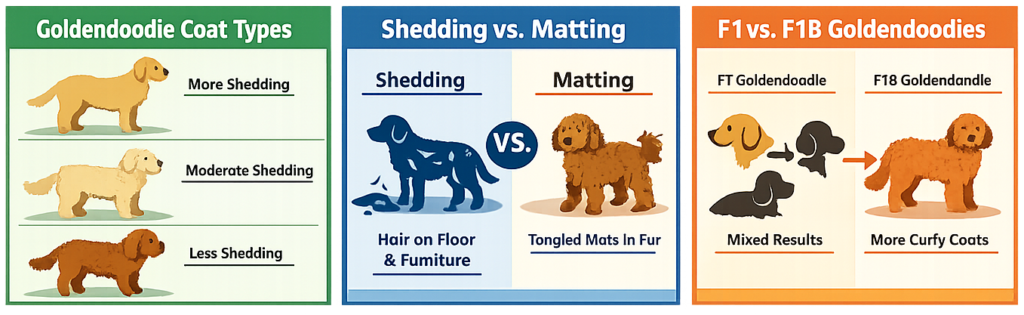
A Goldendoodle’s coat usually falls into one of four buckets: straight, wavy, curly, or mixed. Straighter coats tend to drop hair into the house more like a Golden Retriever. Curlier coats tend to hold loose hair inside the curls more like a Poodle, which can make your floors look cleaner while mats quietly build up near the skin.
If a clean home or allergies matter to you, you’re not being dramatic. You just need the facts before the dog does what dogs do.
Key takeaways
- Goldendoodles shed, the amount varies a lot
- Straight and flat coats usually shed more visibly
- Curly coats often shed less visibly but mat faster
- F1 and F1B labels hint at odds, not guarantees
- Furnishings and “improper coat” terms matter for predicting shedding
- Brush first, comb second, especially in friction zones
- Low shedding does not equal allergy-safe
Quick answer box
Short version: Goldendoodles shed, but the amount depends mostly on coat type and whether an undercoat shows up.
Expect this tradeoff: less visible shedding often means more grooming work.
| Coat look | What you’ll usually notice |
|---|---|
| Straight | more hair on clothes and furniture |
| Wavy | some hair, plus tangles in high-rub spots |
| Curly | less hair on the floor, more mat risk |
| Mixed | unpredictable, because life is unfair |
What decides the mess
Most shedding complaints come down to three things.
First, coat texture. Straight hair drops. Curly hair holds. Wavy hair does a little of both, just to keep you guessing.
Second, undercoat. If your Goldendoodle ends up with an undercoat, seasonal shedding can hit harder.
Third, your grooming routine. A slicker brush can make the house look better fast, but a metal comb is what tells you if you actually got down to the skin or just fluffed the top.
Furnishings vs unfurnished vs “improper coat” (and why it changes shedding)
This breeder terminology shows up on page one for a reason. It’s one of the fastest ways to guess whether a Goldendoodle is more likely to shed like a retriever or hold hair like a poodle.
What “furnishings” means
Furnishings are the longer facial hairs that create the classic doodle look, like a beard, moustache, and eyebrow fluff. A furnished dog often has that teddy-bear face people expect when they hear “Goldendoodle.”
Here’s the useful part: furnished coats are often paired with more poodle-like texture, which can mean less visible shedding in the home. Not always, but often.
What “unfurnished” means
An unfurnished Goldendoodle usually has a cleaner, flatter face that looks more Golden Retriever-like. These dogs can be great dogs, but they’re more likely to shed more because the coat tends to behave closer to the retriever side.
If the face looks smooth and the body coat looks straighter, it’s smart to plan for more vacuum time.
What people mean by “improper coat” or “flat coat”
“Improper coat” is commonly used for doodles whose coat stays flatter or straighter than expected. You’ll also hear “flat coat.” This is the coat type most likely to disappoint someone shopping for “low shedding.”
It doesn’t mean the dog is unhealthy or “bad quality.” It just means the coat traits didn’t land where the buyer hoped.
A simple way to use this on doodletips.com
If someone is picking a puppy and shedding matters, the fastest screening questions are:
- Are the puppies furnished or unfurnished
- Does this pairing produce flat coats or improper coats often
- What do adult dogs from this line look like at 12 to 24 months
Quick reality check
Even a furnished puppy can shed. Even an unfurnished puppy can be an amazing fit. This section is only about avoiding the most common mismatch: someone wants low shedding, buys a dog with a flatter retriever-style coat, then feels tricked when the couch turns into a lint roller.
Why “non-shedding” gets promised (and why it disappoints)
“Non-shedding Goldendoodle” sells the dream: clean floors, no hair on black clothes, fewer allergy issues. That’s the pitch. The letdown happens because a Goldendoodle isn’t a single predictable breed. It’s a mix, and mixed genetics don’t behave like a guarantee.
A Golden Retriever typically brings coat traits that can include more obvious shedding, especially when an undercoat shows up. A Poodle typically brings coat traits that hold loose hair inside curls. When those traits combine, the result can land anywhere on a wide spectrum. Two puppies from the same litter can look similar at eight weeks and still grow into very different adult coats.
There’s also a sneaky reason “non-shedding” seems true at first. Curlier coats can keep loose hair trapped in the coat instead of dropping it on the floor. The house looks cleaner, so owners assume the dog isn’t shedding. Then mats start forming behind the ears, along the collar line, or under the armpits, and suddenly grooming feels like a problem that “came out of nowhere.”
The useful mindset for doodletips.com is this: aim for “lower shedding,” not “no shedding.” Lower shedding usually comes with a tradeoff. If less hair shows up on the couch, more time needs to go into brushing and combing so loose hair does not turn into tangles and mats.
Goldendoodle coat types in plain English
Most “Do Goldendoodles shed?” confusion disappears once the coat is named correctly. Forget the hype. Look at what’s on the dog.
Straight coat
A straight coat usually looks more Golden Retriever-like, especially on the body and tail. This coat is the most likely to leave hair on furniture, rugs, and clothes because loose hair drops out easily.
What owners notice: hair collects fast in couch seams and on car seats, and the vacuum fills up quicker during seasonal shifts.
Wavy coat
A wavy coat sits in the middle. It can shed a little or a lot depending on density and whether an undercoat shows up. This coat also tangles easily in the “high-rub” areas like behind the ears and under a collar or harness.
What owners notice: less hair than a straight coat, but more “why is the comb stuck” moments if brushing is only surface-level.
Curly coat
A curly coat usually looks more Poodle-like. This coat often sheds less visibly because loose hair gets caught in the curls instead of floating around the house. That sounds perfect until grooming gets skipped. Then the trapped hair turns into mats.
What owners notice: fewer hair tumbleweeds, but more time spent brushing and combing, especially after baths, rain, or swimming.
Mixed coat
A mixed coat is exactly what it sounds like. One dog can have a wavy body, curlier legs, a straighter face, and a different texture on the tail. This is where shedding and matting become harder to predict because each zone behaves differently.
What owners notice: one section brushes out fine, another section grabs the comb and refuses to let go.
Quick self-check for readers
A fast way to connect coat type to shedding without overthinking it:
- If hair drops onto the floor after a light brush, shedding is more visible
- If the house stays cleaner but the comb won’t slide through friction zones, shedding may be trapped and turning into mats
F1 vs F1B vs multigen (without the hype)
These labels tell you the family tree, not a guaranteed shedding level. They can hint at odds, but the coat on the actual dog is what you’ll live with.
F1 Goldendoodle
An F1 is a first-generation cross: Golden Retriever x Poodle. That sounds neat on paper, but the coats can land all over the place. Some F1s end up straighter and shed more. Some end up curlier and shed less visibly. Many land in the wavy middle.
F1B Goldendoodle
An F1B is commonly an F1 bred back to a Poodle. This often increases the chance of a curlier, more poodle-like coat, which can mean less visible shedding in the house.
Here’s the catch. Curlier coats often “hold” loose hair. If brushing and combing slip, that trapped hair turns into mats. So F1B can reduce hair on the couch, but it can raise the grooming workload.
Multigen Goldendoodle
Multigen usually means Goldendoodle bred to Goldendoodle. People assume this makes coats predictable. It can, but only if the breeder consistently selects for the same coat traits over time. If coat types are mixed in the breeding program, results can still vary a lot.
What this means for readers trying to choose
If someone is choosing a puppy for low shedding, the most honest advice is simple:
- Use the generation label as a clue, not a promise
- Ask what coat types show up in this exact line
- Look at adult photos from past litters
- Plan grooming around the coat type, not the label
Puppy coat change: why shedding seems to “start” later
A lot of Goldendoodle owners say the same thing: “This dog didn’t shed, then suddenly it does.” Most of the time, that’s not a sudden shedding problem. It’s the coat changing from puppy coat to adult coat.
In early months, puppy coats are often softer and easier. They can look fairly consistent across a litter, which makes people think the coat is already “set.” Then the adult coat grows in and starts changing the texture, density, and how hair releases.
If the adult coat comes in straighter, shedding usually becomes more visible because loose hair drops into the home. If the adult coat comes in curlier, the house can still look cleaner, but loose hair may get trapped in the curls. That trapped hair is where matting starts, especially in high-rub spots.
The coat-change window is also when tangles often show up for the first time in places owners forget to check: behind the ears, under the collar or harness, and in the armpits.
What readers should watch for
If any of these pop up, the adult coat is likely taking over:
- brushing seems to “work,” but the comb gets stuck near the skin
- the coat feels thicker at the roots
- tangles appear in the same friction zones over and over
- shedding looks worse or grooming suddenly takes longer
The simple habit that prevents most problems
A slicker brush can make the coat look nice on top. A metal comb is the truth. During coat change, a quick comb check in friction zones catches matting early, before it turns into a shave-down.
Shedding vs matting: why a clean floor can still mean a messy coat
This is the part that blindsides people. Some Goldendoodles don’t leave much hair around the house because the loose hair doesn’t fall out. It gets stuck in the coat instead. The home looks cleaner, but the dog can end up uncomfortable.
Shedding is normal hair release. You see it on the couch, clothes, rugs, and in the vacuum. Matting is different. Loose hair tangles with healthy hair and tightens into knots, usually starting near the skin. Once mats form, they can pull on the skin, trap moisture, and make itching worse. That’s why “low shedding” can still come with big grooming stress.
The spots where matting starts first
Behind the ears is the classic one. The collar line is next, especially with a harness. Armpits and inner thighs get friction all day. Tail base and belly can mat too, even when the top coat looks fine.
The mistake that turns tangles into mats
Bathing a coat that’s already tangled can make it worse. Water tightens tangles. Air drying tightens them more. That’s how a few small tangles turn into a shave-down.
Quick check readers can do in under a minute
Use a metal comb and test three spots: behind the ears, collar line, and armpit. If the comb can’t slide from skin to tips, the coat is starting to mat. Brushing the top won’t fix it.
Grooming routine that actually controls shedding
A Goldendoodle grooming plan should do two things at once: pull out loose hair before it lands in your house, and stop that same hair from turning into mats inside the coat. The trick is not grinding for an hour once a week. It’s doing short, repeatable sessions that hit the right spots.
Start with the right expectation. Straight coats usually need brushing to control hair around the home. Curly coats usually need brushing and combing to prevent mats. Wavy coats can go either way, but they tangle fast in friction zones, so they can’t be treated like “easy coats.”
The simple 10-minute routine
Begin with a slicker brush to loosen hair and small tangles. Work in small areas instead of big swipes. Then use a metal comb on the same area. The comb is the pass or fail test. If it won’t slide from skin to tips, that spot needs more work before you move on.
How often to do it
Most homes do well with three schedules.
Straight coat: brush a few times a week, and brush more during spring and fall.
Wavy coat: brush and comb most days, especially if the coat is longer.
Curly coat: brush and comb nearly daily, because loose hair tends to stay trapped until you remove it.
If the dog wears a harness, swims, plays in snow, or gets bathed often, the schedule needs to be tighter. Moisture and friction make tangles lock up fast.
Where to focus so you don’t waste time
Behind the ears is the first hotspot. Collar line and harness straps are next. Armpits and inner thighs are where mats hide. Tail base and belly are common too. These zones matter more than the middle of the back, which is usually the easiest area to brush.
Bathing and drying without creating a problem
Never bathe a coat that is already tangled and hope the bath fixes it. Detangle first. After the bath, dry fully. A damp coat that air-dries tends to tighten tangles and make matting worse, especially in curls and waves.
When to use a pro groomer
A steady trim schedule makes everything easier. Many Goldendoodles do well on a 6 to 10 week grooming cycle. Shorter clips often reduce daily upkeep. Longer coats look great, but they demand consistent combing down to the skin.
Allergies and the “hypoallergenic” claim
Now, before anybody gets mad, “hypoallergenic” is not a guarantee. It’s a sales label that sounds comforting, like “waterproof” socks. Spoiler alert: you still get wet.
Most people aren’t reacting to “fur.” They’re reacting to proteins that hitch a ride on dander (skin flakes) and saliva. One of the big dog allergens, Can f 1, is linked to saliva and dander, which is why a dog that barely sheds can still light up your nose.
So yes, a lower-shedding coat can help some homes because there’s less hair floating around. But the allergen sources are still there, and they still spread when the dog licks, scratches, rolls on the couch, or sleeps on your pillow like it pays rent.
What helps in a real house
Start with the easiest wins. Make the bedroom a no-dog zone if symptoms are serious. Wash hands after petting. Keep the dog off upholstered furniture if you’re having a rough week. If bathing works for your dog, weekly baths can cut dander for some families, but not every dog tolerates that schedule.
Here’s a quick “do this, not that” table:
| If the problem is… | Try this first |
|---|---|
| Sneezing and itchy eyes at night | Keep the dog out of the bedroom, wash bedding often |
| Symptoms spike after cuddles | Skip face hugs and licking, wash hands right after |
| House feels “dusty” fast | Vacuum with a good filter and clean the filter on schedule |
| Allergies are steady no matter what | Talk with an allergist about testing and treatment options |
If asthma is in the picture, don’t tough it out. Get medical advice early. That’s cheaper than an ER visit and less annoying than pretending you’re fine.
Health reasons Goldendoodles can suddenly shed more
Sometimes shedding ramps up because of normal seasonal change or coat change. But when it jumps fast, looks patchy, or comes with itching, it can be a health issue showing up through the coat.
The most common driver is skin irritation. Dogs scratch, rub, and chew. That breaks hair and increases hair loss. With doodles, mats can also trap moisture against the skin, which makes irritation and odor worse.
Parasites can do it too. Fleas can trigger heavy itching. Mites can cause crusty skin and thinning spots. A dog can look like it’s “shedding like crazy” when it’s actually inflamed and uncomfortable.
Then there are yeast or bacterial infections, which often show up as a strong smell, greasy coat, redness, and repeated licking. Ear issues and paw chewing can travel with this picture, especially in dogs with allergies.
Food sensitivity is another common suspect when skin and ears keep flaring. It usually comes with more than shedding, like itchy ears, paw chewing, or recurring stomach trouble.
Finally, hormone problems can affect coat quality and shedding, especially when thinning is widespread and the dog also seems low energy or gains weight.
When a vet visit is the smart move
If any of these show up, it’s time to stop guessing:
- bald patches, raw spots, or bleeding skin
- strong odor plus redness
- nonstop itching that doesn’t settle
- sudden coat thinning plus low energy or weight changes
Choosing a Goldendoodle with shedding in mind
This is where most people mess up. They shop for “low shedding” and forget they’re really choosing between two tradeoffs: hair in the house or work on the coat. Both are manageable. The mismatch is what hurts.
Start by picking your real priority
If the main goal is less hair on furniture, a curlier or more furnished look often lines up with that. If the main goal is lower grooming effort, a shorter clip schedule matters more than any generation label.
What to look for in a puppy (without pretending it’s a guarantee)
A puppy’s coat can change, but there are still clues.
A flatter, cleaner face often suggests an unfurnished look, and those dogs are more likely to shed like the retriever side. A beardy, eyebrow-fluffy face suggests furnishings, which often tracks with more poodle-like texture and less visible shedding.
Also look at coat feel on the body. Straighter hair tends to drop more into the home. Wavy and curly hair tends to hold loose hair until brushing.
What to ask a breeder so you don’t get sold a fantasy
Ask questions that force plain answers.
- Do pups from this line show up unfurnished or with a flat or improper coat
- What do adult dogs from this pairing look like at 12 to 24 months
- What does “low shedding” mean in your home: less hair on floors, less hair on clothes, or just easier cleanup
- How often do your adult dogs need a comb down to the skin
- How often do your dogs need professional grooming to stay mat-free
If the answers stay vague, that’s a sign. Good breeders talk about variability and maintenance without getting defensive.
What matters more than F1 or F1B
The label is less important than the parents and the track record of the line.
If you can see adult dogs from past litters that match what you want, that’s stronger than any “F1B means low shedding” claim. If the breeder can’t show adult examples, plan for uncertainty.
The simple decision rule that protects readers
If a home can’t handle brushing and combing most days, it’s safer to plan for a short, maintained clip and a steady groomer schedule. That setup makes shedding and matting easier to live with, no matter what coat traits show up.
House setup and cleanup habits that make shedding manageable
A Goldendoodle doesn’t have to turn your home into a fur museum. The trick is setting up the house so hair and dander don’t spread everywhere, then sticking to a routine that’s boring but effective.
Create a “hair zone” by the door
Pick one spot where brushing happens every time. A porch, garage, mudroom, or even a washable mat near the entry works. Brushing in the same place keeps loose hair from drifting through the whole house. Keep the slicker brush, metal comb, and a towel wipe right there so it’s effortless.
Make the couch easier to live with
If the dog is allowed on furniture, use a washable throw blanket and treat it like a removable “dog layer.” It’s easier to wash one cover than to fight hair embedded in cushions.
Fabric matters too. Tight-weave fabrics usually release hair more easily than fuzzy textures that trap it.
A cleanup routine that doesn’t take over your life
Daily doesn’t need to be intense. Two to five minutes is enough to stop buildup.
A simple rhythm that works in most homes:
- quick sweep of the main traffic path and the couch area each day
- one real vacuum session each week with a pet hair tool
- wash dog bedding weekly, because that’s where dander builds up fast
- clean the vacuum filter and brush roll monthly, because clogged tools make everything feel worse
Cut down on “hair hitchhikers”
A lot of the mess comes from what the coat picks up outside.
After walks, wipe paws and lower legs. After rain or snow, towel dry before the dog flops onto furniture. If pollen is an issue, this single habit can noticeably reduce symptoms in allergy-sensitive homes.
Car setup that saves your sanity
Put a washable seat cover or cargo liner down. Keep a small lint roller in the console. Brush the dog quickly before long rides if shedding is heavy that week. It’s cheaper than detailing.
FAQ
Do Goldendoodles shed a lot
Some do. Some barely shed. The biggest predictor is coat traits like straight vs curly and whether an undercoat shows up.
Which Goldendoodle coat sheds the least
Curly coats often shed less visibly because loose hair gets caught in the curls. The tradeoff is matting risk if combing gets skipped.
Do Goldendoodles shed more in spring and fall
Many do, especially if an undercoat is present. Even low-shedding coats can feel heavier during seasonal shifts.
Do F1B Goldendoodles always shed less
No. F1B can increase the odds of a curlier coat, but it’s not a promise. Coat results still vary.
What is an “improper coat” and does it shed more
“Improper coat” often means a flatter, retriever-style coat with less facial furnishings. These coats are more likely to shed more.
Can grooming actually reduce shedding
Grooming controls where hair ends up. Regular brushing pulls loose hair out before it lands on floors and furniture.
Can a low-shedding Goldendoodle still trigger allergies
Yes. Allergens are proteins linked to dander and saliva. Less shedding can help some homes, but it’s not a guarantee.
Wrap-up
Goldendoodles shed, but the real story is how the coat behaves. Straighter, flatter coats tend to drop hair into the home. Curlier, more furnished coats tend to hold loose hair, which can make the house look cleaner while mats build up if grooming is inconsistent. The win for readers is ditching the “non-shedding” fantasy and choosing a plan that matches real life: the right coat expectations, a short grooming routine that actually reaches the skin, and a home setup that keeps hair from spreading.