
What you want right now
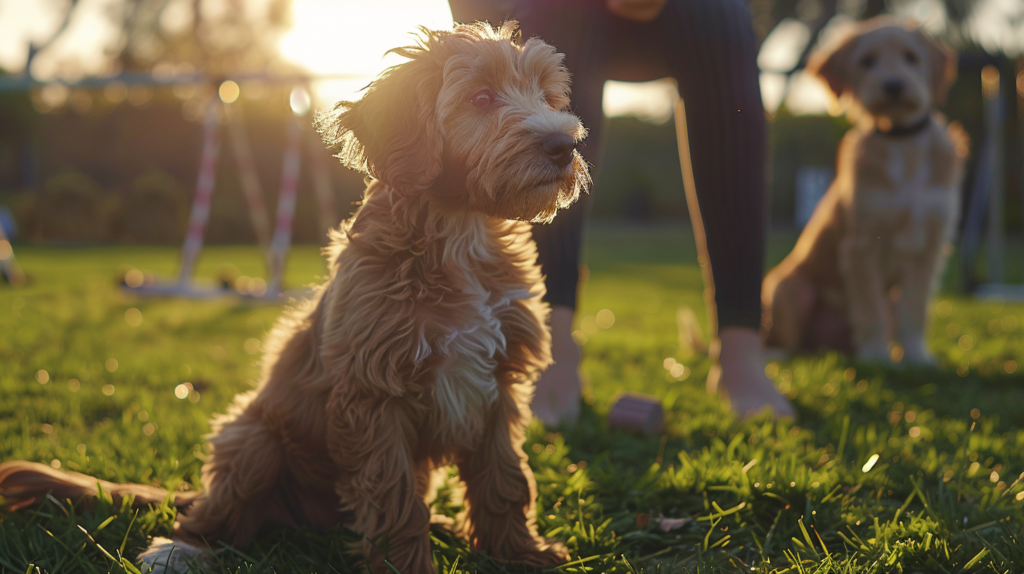
Aussiedoodle puppy training starts with a routine that keeps your puppy calm, clean, and safe. If you feel overwhelmed, that is normal. This breed mix often has high drive, fast learning, and low patience when tired.
What this guide covers
- potty schedule, crate naps, and playpen time
- marker word, release cue, and reward timing
- bite control, leash basics, and recall on a long line
What you need ready today
Treat pouch, enzyme cleaner, harness, ID tag, and a vet-approved vaccine schedule. Training works best when you prevent bad reps and reward the right ones fast. You will also learn how to handle paws and ears, build alone-time reps, and spot a fear period before it turns into barking at home.
- Key Takeaways
- Before Training Starts: Setup That Prevents Problems
- Daily Routine That Stops Chaos
- Naps: the secret weapon
- Training sessions: short, sharp, done
- Play and exercise: don’t overdo it
- Evening plan for the “witching hour”
- A weekly freedom upgrade plan
- House Training That Actually Sticks
- Crate Training Without the Drama
- Puppy Biting and Mouthing: Stop the Shark Teeth Without Starting a War
- Name Response and Attention: Get Focus Without Begging
- First Cues That Make Life Easier
- Recall That Holds Up Outside
- Leash Training Without Getting Dragged
- Settle and Calm: The Skill That Makes Everything Else Easier
- Socialization That Builds a Steady Dog
- Alone-Time Training and Separation Whining
- Fixing Common Aussiedoodle Puppy Problems (Same-Day Plans)
- Week-by-Week Training Plan (First 8 Weeks at Home)
- FAQ
- References
Key Takeaways
- Routine beats willpower. Your puppy needs potty, nap, chew, play, calm on repeat.
- Most “training issues” are actually too much freedom. Use crate, pen, gates.
- Teach sit, wait, leave it, drop it first. Those solve daily problems.
- Recall needs a long line and rewards, not wishful thinking.
- Socialization means safe exposure and calm, not forced greetings.
- If evenings are chaos, add an earlier nap and shift to chew + settle time.
Before Training Starts: Setup That Prevents Problems
Home layout that keeps you sane
Spoiler alert, most “training problems” are just too much freedom. Use space like a grown-up.
- Crate in a low-traffic area where sleep actually happens (not the hallway stampede zone). The crate is a rest spot, not a penalty box.
- Playpen or baby gates to block off rooms. Fewer rooms means fewer accidents and fewer stolen socks.
- One potty door you always use. Consistency beats hope every time.
Puppy-proof checklist
If the puppy can reach it, the puppy can chew it. That includes “just for a second” items.
- power cords, phone chargers
- shoes, kids’ toys, laundry piles
- trash cans, food on tables, dish towels
- houseplants (some are unsafe for dogs)
Gear that pulls its weight
All right, here’s the short list that changes day-to-day life.
| Item | What you use it for | Common mistake |
|---|---|---|
| Harness + 6-ft leash | walk practice, greeting control | letting pulling work |
| Long line (15–30 ft) | recall practice outdoors | using it near traffic |
| Crate + washable bedding | naps, bedtime, safe downtime | only using it when you leave |
| Enzyme cleaner | removes accident odor | using regular soap only |
| Treat pouch | fast reward timing | treats kept “somewhere nearby” |
Rewards, markers, and timing
Aussiedoodle puppies learn fast, but they also learn the wrong thing fast.
- Pick 3 reward types: kibble, soft treats, and a toy (tug or ball). Rotate them so rewards stay interesting.
- Use a marker word like “yes” the instant the right behavior happens, then deliver the treat. Reward-based training is the standard recommended approach in veterinary behavior guidance.
- Keep training reps short. Stop after a few wins, not after the puppy melts down.
Socialization rules that keep your puppy steady
Socialization is not “meet every dog.” It is safe exposure where the puppy stays relaxed and curious. The most important socialization period is in the first three months of life.
- Do calm exposure to sounds, surfaces, hats, umbrellas, wheelchairs, delivery trucks, and friendly people at a distance.
- Balance exposure with health. Veterinary guidance supports socialization while also managing infectious disease risk based on the puppy’s vaccine status and local risk.
- Skip random leash greetings. Distance is a tool.
Daily Routine That Stops Chaos
Why routine matters (and why it feels hard at first)
Aussiedoodle puppy training gets easier when the day runs on a loop. Puppies don’t “act out” for no reason. Most of the time it’s one of these: needs to pee, needs to sleep, needs to chew, needs to move. The routine makes those needs predictable, so the puppy stops inventing bad hobbies.
The simple rule that fixes a lot
A puppy is usually either:
- Sleeping
- Pottying
- Eating
- Chewing
- Playing
- Training (short)
- Calming down
If the puppy is loose in the house and not doing one of those, trouble is loading.
A sample day (8–12 weeks)
| Time Block | What happens | Goal |
|---|---|---|
| Wake up | Potty trip first | Prevent accidents |
| 10–15 min | Breakfast + water | Fuel, then potty again |
| 5 min | Tiny training session | Build focus without burnout |
| 10–20 min | Play (gentle) + chew | Use teeth on legal stuff |
| 60–90 min | Crate or pen nap | Prevent overtired biting |
| Repeat loop | Potty, short play, nap | Consistency beats chaos |
| Evening | Calm chew + early bedtime | Avoid “witching hour” spiral |
Potty timing triggers (treat these like alarms)
Potty trip happens:
- right after waking up
- right after eating
- right after a big drink
- right after play
- before and after crate time
- anytime sniffing circles start
If accidents are happening, reduce freedom and increase potty trips. It’s not “stubborn.” It’s math.
How long can the puppy hold it?
Quick guide, not a promise:
- 8–10 weeks: about 30–60 minutes when awake
- 10–12 weeks: about 60–90 minutes when awake
- 12–16 weeks: about 90–120 minutes when awake
Sleep can stretch it, but don’t gamble. Gambling is how carpets get ruined.
Naps: the secret weapon
How much sleep is normal
Most puppies need a lot of sleep. When a puppy gets overtired, it looks like:
- biting harder
- zoomies
- barking at nothing
- ignoring cues that worked earlier
Nap plan that works
Use a simple pattern:
- Up for 45–60 minutes
- Down for 60–90 minutes
If the puppy is a land shark, it usually needs a nap, not a longer play session.
Training sessions: short, sharp, done
Session length
Keep it small:
- 1–3 minutes for young puppies
- 3–5 minutes as focus improves
Session structure
- Start easy (one cue the puppy wins fast)
- Do 5–10 reps
- End with a chew or a calm settle
Good times to train
- before meals (use some kibble)
- after a potty win
- after a nap (brain is fresh)
Bad time to train: right before a nap when the puppy is cranky and mouthy.
Play and exercise: don’t overdo it
What “enough” looks like
Aussiedoodles can rev up fast. Long wild play can backfire and create more biting.
Choose:
- tug with rules (tug starts and stops on cue)
- short fetch on soft ground
- sniff walks in the yard or driveway
- food puzzles and scatter feeding
Avoid long forced runs. Puppy joints are still developing.
Evening plan for the “witching hour”
Why evenings get ugly
By evening, the puppy’s day is full. Brain is tired, body is tired, teeth still want action.
Fix it with a 3-step loop
- Potty trip
- Calm chew (10–20 minutes)
- Crate nap or pen settle
If biting spikes at night, add an earlier nap and reduce rough play after dinner.
A weekly freedom upgrade plan
Start strict, earn space
- Week 1: one room only, supervised, crate and pen used daily
- Week 2: add a second space only if accidents are rare
- Week 3: increase freedom in tiny steps, not big leaps
Freedom is earned by clean weeks, not by hope.
House Training That Actually Sticks
What’s really happening
House training isn’t a “skill” your Aussiedoodle puppy suddenly understands. It’s a habit built from:
- timing (getting outside before the urge wins)
- location (same spot = faster learning)
- reward (paid immediately after the pee/poop happens)
- supervision (no secret bathroom breaks behind the couch)
If accidents keep happening, it’s almost never because the puppy “doesn’t get it.” It’s because the puppy had access + time.
Potty schedule that works in real life
Use “after-events” as your schedule
Take the puppy out:
- right after waking up
- right after eating
- right after drinking
- right after play
- right after training
- before crate time
- right after crate time
- anytime sniffing, circling, or suddenly leaving the room happens
Add a timer when the puppy is awake
Start stricter than you think you need:
- every 30–45 minutes at first when awake
- then stretch it slowly after consistent success
Pick one potty spot and one potty cue
Same spot matters
Choose one outdoor spot and use it every time early on. Smell helps the puppy connect the dots fast.
Simple potty cue
Say one cue quietly, like:
- “go potty”
- “busy”
- “hurry up”
Say it once, then stand still and boring. When the puppy goes, reward immediately.
Reward timing: the part most people mess up
Pay fast, not later
Reward should happen:
- within 1–2 seconds after the puppy finishes
If the treat comes after walking back inside, the puppy might think you’re rewarding the walk, the door, or sitting.
Use high-value treats for potty wins
Early on, potty outside should be “jackpot” level compared to normal cues.
Supervision rules that prevent accidents
If eyes aren’t on the puppy, the puppy isn’t loose
That’s the whole system.
Use one of these:
- tether the puppy to you with a leash
- playpen in the same room
- crate for naps and short downtime
Free-roaming is something the puppy earns later.
The accident plan (what to do in the moment)
If you catch it mid-accident
- Say a neutral interrupter: “oops” (not yelling)
- Scoop the puppy up or guide quickly outside
- Wait quietly
- If the puppy finishes outside, reward like it’s the best thing ever
If you find it after the fact
- say nothing to the puppy
- clean it fully
- tighten the schedule and reduce freedom
Punishing after the fact just teaches the puppy that humans near pee are scary, which can create sneaky peeing.
Cleaning that actually removes the “bathroom sign”
Use the right cleaner
Accident smell is a repeat invitation. Clean thoroughly and block access if the puppy returns to the same spot.
Tip: if the puppy has 2–3 accidents in the same area, that area is “too hard” right now. Close it off.
Potty log (the fastest way to fix patterns)
Track for 3–5 days
Write down:
- time
- pee or poop
- where it happened
- what happened right before (nap, play, meal)
Most owners find a pattern fast (like “always 12 minutes after dinner” or “right after wrestling with a toy”).
When to increase freedom (and when not to)
Add freedom only after consistency
A good rule:
- 7 days with no accidents in the current space before expanding
If you expand and accidents return, shrink the space again. That’s not failure. That’s feedback.
Quick troubleshooting
“My puppy pees right after coming inside.”
You likely went inside too fast. Stay out 2–5 minutes. Keep it boring. Give the puppy time to fully empty.
“My puppy won’t go outside.”
The spot may be too distracting or scary. Move to a quieter area and stand still. Less talking, less motion.
“Accidents happen only when playing.”
Play increases urgency. Add a potty trip before play and again after 5–10 minutes of play.
“Regression happened after doing great.”
Usually one of these:
- freedom increased too quickly
- schedule got loose
- the puppy is distracted outdoors
- the puppy is overtired
Reset to a tighter schedule for a week.
Crate Training Without the Drama
What the crate is for (and what it isn’t)
For Aussiedoodle puppy training, the crate is a sleep tool and a supervision tool. It prevents accidents, protects furniture, and forces naps so your puppy’s brain doesn’t melt into biting and zoomies.
It is not a place to shove the puppy when you’re angry.
Crate basics that make it work fast
Pick the right setup
- Put the crate in a calmer area where the puppy can actually fall asleep.
- Use safe bedding you can wash.
- Keep water out during short naps if it leads to accidents (but never restrict water for long periods).
Make the crate predict good things
- Feed meals in the crate (door open at first).
- Toss a treat in, let the puppy walk in and out freely.
- Give a chew only the crate “unlocks.”
The 3-phase plan (simple and effective)
Phase 1: “Crate = treats” (door stays open)
Do 5–10 reps a day:
- toss treat in → puppy enters → “yes” → puppy eats → puppy can leave
Goal: puppy chooses the crate, no pressure.
Phase 2: “Door closes for a second”
Do 3–5 reps:
- puppy goes in → treat → close door 1–3 seconds → treat → open door
Goal: door movement stops being a trigger.
Phase 3: “Short calm stays”
Build slowly:
- 10 seconds → 20 → 40 → 1 minute → 2 minutes
Add a chew for longer reps.
Rule: if whining starts, you went too fast.
Nap routine that stops the land-shark phase
Use naps on purpose
- Up for 45–60 minutes
- Down for 60–90 minutes
If your puppy starts biting harder, grabbing clothes, or racing room to room, it’s usually nap time.
Nap script (keep it boring)
- potty trip
- crate with a chew
- lights down, minimal talking
- ignore minor fussing, reward calm
Whining and barking: what to do (and what not to do)
First, check the basics
Whining can mean:
- needs to potty
- overtired but fighting sleep
- wants attention
- had too much freedom and is now mad about boundaries
What NOT to do
- don’t let whining open the door (that trains whining)
- don’t yell (that adds energy and stress)
- don’t keep restarting the routine (that teaches negotiation)
What TO do instead
- If you know the puppy just pottied and has been awake a while, wait for a 1–2 second quiet moment, then calmly reward or release.
- If it’s been a while or the puppy is very young, do a silent potty trip: leash on, outside, no play, back to crate.
That teaches: “quiet gets results,” not “noise gets results.”
Building alone time so the crate doesn’t mean panic
Micro-reps during the day
Do tiny practice sessions when you’re home:
- puppy in crate with chew
- you step away for 10 seconds
- return quietly before whining starts
- gradually increase time
This prevents the crate from becoming a “you disappear” trigger.
Make leaving boring
No big goodbyes, no big hellos. Calm is the goal.
Common crate mistakes that create long-term problems
- Using the crate only when you leave the house
- Keeping the puppy awake too long, then crating a wired puppy
- Giving attention during loud whining
- Making the crate a punishment zone
- Skipping the potty trip before crating
Quick troubleshooting
“My puppy hates the crate at night.”
Move the crate closer to where people sleep for a bit, then gradually increase distance over days.
“Crate is fine until the door closes.”
You rushed Phase 2. Go back to 1–3 second closes and pay heavily.
“Whining starts the second I walk away.”
You need shorter alone-time reps. Start with seconds, not minutes.
Puppy Biting and Mouthing: Stop the Shark Teeth Without Starting a War
Why Aussiedoodle puppies bite so much
Aussiedoodles often bite for boring reasons, not “bad attitude.” Most of it is:
- teething pain (mouth feels weird, chewing helps)
- over-tired brain (skips self-control and goes straight to teeth)
- over-excited play (hands move, puppy grabs)
- herding-style nips (ankles, pant legs, sleeves)
If biting gets worse in the evening, you’re not crazy. That’s usually a sleep problem, not a training problem.
The rule that makes biting shrink fast
Skin bite = play pauses
Every time teeth hit skin or clothes:
- Freeze. Hands still. Feet still.
- Say one calm word like “oops.”
- End access for 10–20 seconds (step behind a gate, turn away, or place the puppy in the pen).
- Come back and offer a chew or a toy.
- Restart play only if the mouth is calm.
That’s it. No yelling. No wrestling the puppy. No long speeches.
What to do instead of “no bite”
Teach the puppy what works
Puppies don’t quit biting because you said “no.” They quit biting because something else pays better.
Use this simple swap:
- biting hands → chew toy appears
- calm mouth → play continues
- teeth on skin → fun stops
Chew plan for teething (so your furniture survives)
Make chewing legal and easy
Put chews in zones where you actually want calm.
- soft rubber chew
- textured chew
- stuffed food toy (use part of a meal)
- frozen washcloth tied in a knot (supervised)
Rotate chews. If the same chew sits out all day, it becomes background noise.
A bite-control routine that fits real life
Use this loop 2–4 times daily
- Potty trip
- 2 minutes of simple cues (sit, down)
- 3–5 minutes of gentle play
- Chew time in crate or pen
- Nap
Biting drops fast when naps are steady. An over-tired puppy bites like it’s their job.
Hands, kids, and chaos
House rule: no running games indoors
Running turns ankles into moving targets. If kids run and squeal, biting usually spikes.
Safe kid interactions
- kids toss treats to the floor
- kids hold a toy for tug (adult supervises)
- kids pet the puppy only when the puppy is sitting or lying down
If the puppy is jumping and biting, the kid leaves the area. Not as punishment, just safety.
Quick troubleshooting
“My puppy bites harder when I try to stop them.”
That means the stopping method is adding energy. Use the freeze + short break. Keep it quiet.
“Redirecting doesn’t work.”
It can fail if the puppy is too wound up. Add a nap and shorten play. Also make sure the chew is actually worth using.
“The puppy bites only me.”
You probably move faster, talk more, or play rougher. Calm body language helps. Slow hands. Fewer sudden grabs.
What not to do (because it backfires)
| What people do | Why it gets worse |
|---|---|
| yelling or loud reactions | adds energy and attention |
| pushing the puppy away | turns into a game |
| grabbing the muzzle | creates stress and more thrashing |
| long time-outs | puppy forgets why it happened |
Name Response and Attention: Get Focus Without Begging
Why this matters
An Aussiedoodle puppy that checks in on purpose is easier to potty train, easier to walk, and way less likely to practice bad habits. If it feels like the puppy has “selective hearing,” it’s usually not defiance. It’s distraction, tiredness, or the cue being used too much with no payoff.
Teach the name like it’s a cue, not a label
Name Game (60 seconds, 2–3 times a day)
- Say the puppy’s name one time
- The moment the puppy looks at you: mark (“yes”) and reward
- If there’s no look in 2 seconds: make a soft noise (kissy sound) or step backward, then reward the look
- Repeat 5–10 reps, then stop
Rules that make it work
- Don’t repeat the name like a broken doorbell
- Don’t say the name and then do something the puppy hates (bath, nail trim, end of play) every time
- If the puppy is wild or mouthy, do a nap first. Focus doesn’t happen in meltdown mode.
Build “check-ins” so you’re not invisible on walks
Check-in reps indoors
- Walk around the room quietly
- The puppy looks at you on their own: reward
- Keep moving after rewarding so the puppy learns, “watching pays while life continues”
Level it up outdoors (easy mode)
- Start in the yard or driveway on leash
- Stand still and wait
- The puppy glances at you: reward
- Repeat until the puppy starts offering eye contact faster
This is the foundation for leash manners and recall later.
Use distance as your cheat code
If the puppy won’t look at you, the environment is too hard.
Don’t argue with the puppy’s brain. Change the setup:
- move farther from people/dogs
- go to a quieter spot
- shorten the session
- switch to higher-value treats for that location
Focus is a skill that grows with success, not pressure.
A simple attention ladder (so you know what to train)
| Level | Location | Goal |
|---|---|---|
| 1 | Living room | Looks at name instantly |
| 2 | Backyard | Offers check-ins |
| 3 | Front yard/sidewalk | Looks despite mild distractions |
| 4 | Park edge (far away) | Checks in while watching dogs/people |
| 5 | Busy areas | Focus with distance and practice |
Only move up when the puppy is winning most reps.
Quick fixes for common problems
“My puppy only looks when food is visible.”
Hide treats in a pouch or pocket. Reward from the pocket. The puppy should learn: focus makes food appear.
“My puppy ignores their name outside.”
That’s normal early on. Go back to easy locations and rebuild. Outside is a harder classroom.
“My puppy gets obsessed with leaves, sticks, everything.”
Use two tools:
- reward check-ins more often outdoors
- give short “sniff breaks” as a reward (sniffing is powerful)
Micro-sessions you can do daily
One-minute habits
- 10 name reps before a meal
- 5 check-in rewards during a calm walk
- reward 3 random calm glances at you inside the house
Small reps stack fast with this breed mix.
First Cues That Make Life Easier
The real goal
You’re not teaching tricks. You’re teaching your Aussiedoodle puppy how to live in your house without turning it into a chew museum and a slip hazard.
Here’s the deal. Start with cues that control the daily mess:
- sitting for food and greetings
- waiting at doors
- leaving junk alone
- dropping stolen items
Keep sessions short. You want the puppy winning, not arguing.
How to teach any cue (the 10-second pattern)
- Say the cue once.
- Puppy does the thing.
- Mark with “yes.”
- Reward.
- Release with “free” so the puppy knows the job is done.
If you skip the release cue, you’ll get that confused puppy look like you asked for taxes.
Sit
Why you want it
Sit is your “pause button” for jumping, feeding, leashing up, and guest greetings.
How to teach it
- Hold a treat at the puppy’s nose.
- Move it up and slightly back.
- The puppy’s butt hits the floor.
- Say “yes,” then reward.
Use it in real life
- Food bowl goes down only after a sit.
- Leash clips on only after a sit.
- Greeting starts only after a sit.
Common mistake
- Repeating “sit, sit, sit.” Say it once, then help the puppy win.
Down
Why you want it
Down helps with calm. It also slows the puppy down when excitement is climbing.
How to teach it
- Start from sit.
- Bring the treat straight down to the floor.
- Slowly slide the treat forward a few inches.
- The puppy folds into down.
- “Yes,” reward.
If the puppy pops up, slide the treat slower and reward the moment elbows touch.
Wait (doors, crate, car)
Why you want it
Wait stops door-dashing and makes you look like you have your life together.
How to teach it at a door
- Put the puppy on leash.
- Ask for sit.
- Say “wait.”
- Crack the door one inch.
- If the puppy moves forward, close the door gently.
- Try again.
- When the puppy holds still for one second, say “free” and go through.
Goal
- The puppy learns: pushing makes the door stop. holding still makes the door open.
Leave it (don’t grab it)
Why you want it
Because puppies treat the world like an all-you-can-eat buffet.
The easy starter game
- Put a treat in a closed fist.
- Let the puppy sniff and lick.
- The moment the puppy pulls back or stops bothering your hand, say “yes.”
- Give a different treat from the other hand.
That teaches: ignoring the thing makes food appear.
Level up
- Treat on the floor, covered by your hand or foot.
- Puppy backs off, “yes,” reward from your hand.
- Later, you can add walking past items on leash.
Drop it (give it up)
Why you want it
This is your sock recovery plan.
Trade game
- Puppy has a toy.
- Put a treat right at the puppy’s nose.
- Puppy drops the toy to eat the treat.
- Say “yes.”
- Give the toy back.
Giving it back is the magic. It stops “drop it” from sounding like “hand over your treasure forever.”
When it’s a stolen object
- Don’t chase. Chasing turns it into a sport.
- Stay calm, grab a treat, trade, then block access so it doesn’t happen again.
Greeting manners (no jumping)
Why jumping sticks
Jumping works. It gets attention. Even “no” counts as attention to a puppy.
The rule
- Four paws on the floor earns greeting.
- Jumping makes the person turn away.
Simple setup
- Keep the puppy on leash when guests arrive.
- Ask for sit.
- Guest greets only when the sit happens.
- If the puppy jumps, guest turns away and you reset.
What to teach first (so you don’t bounce around)
| Cue | Best daily use | Practice reps |
|---|---|---|
| Sit | food, leash, greetings | 5 to 10 |
| Wait | doors, crate, car | 3 to 6 |
| Leave it | trash, sticks, socks | 5 |
| Drop it | trading items | 5 |
| Down | calm moments | 3 to 5 |
If you do just these for two weeks, you’ll feel the difference.
Quick fixes if it’s not working
“My puppy won’t listen.”
The place is too distracting or the puppy is tired. Train after a nap, indoors, then slowly move outside.
“My puppy only works for treats.”
Good. That means the puppy is honest. Hide treats in a pouch, pay fast, and start rewarding some reps with play or a sniff break later on.
“Leave it makes my puppy lunge harder.”
You moved too fast. Go back to the closed-fist game. Make it easy again.
Recall That Holds Up Outside
Why recall is worth your time
Aussiedoodle puppy training gets way less stressful when “come” actually means “run to you fast.” Recall isn’t about control. It’s about safety. Also, it saves you from doing that embarrassing jog while calling your puppy like you’re trying to summon a taxi.
Safety rules first (so nobody gets hurt)
- Use a harness and a long line (15–30 ft) for outdoor practice.
- No off-leash “testing” in open areas. If the puppy ignores you once, you just trained ignoring.
- Don’t call the puppy if you can’t follow through. Use the long line so the cue stays honest.
Pick two recall words
You need:
- Everyday recall: “come” or “here”
- Emergency recall: a special word you almost never use (example: “now!” or “fast!”)
Rules
- Say the cue one time
- Reward every time early on
- Keep your tone calm and upbeat
Teach recall indoors first (where the puppy can win)
Game 1: Ping-Pong Recall
- Two people stand 6–10 feet apart.
- Person A says “come” once.
- Puppy arrives, “yes,” reward.
- Person B repeats.
- Do 6–10 reps, stop.
Game 2: Hide-and-Seek
- Puppy is distracted with a toy.
- You walk behind a doorway.
- Say “come” once.
- When the puppy finds you: “yes,” reward, then let the puppy go back to play.
Game 3: Collar Grab = Treat
This prevents the “you touched my collar, so I dodge you” habit.
- Touch collar gently, “yes,” treat.
- Repeat 5 reps.
- Later: cue “come,” puppy arrives, collar touch, treat.
Move outdoors with a long line (step-by-step)
Level 1: Backyard, boring moment
- Puppy is sniffing calmly.
- Say “come” once.
- If the puppy turns toward you, back up a few steps to help them chase you.
- When the puppy arrives: “yes,” reward.
- Then give a release cue (“free”) and let the puppy sniff again.
That last part matters. If “come” always ends the fun, your puppy will start treating recall like a bad deal.
Level 2: Backyard, mild distraction
- Same plan, but call when the puppy is mildly busy.
- Pay better for faster responses.
Level 3: Front yard or quiet sidewalk
- Keep distance from people and dogs.
- Practice 3–5 reps total, then stop.
Level 4: More distracting places
- Increase distance from distractions.
- Use fewer reps, bigger rewards.
- Don’t turn practice into a marathon.
Emergency recall (make it automatic)
This is the “drop everything and sprint to me” cue.
How to teach it
- Say the emergency word once.
- Immediately feed 5–10 treats in a row, one after another.
- Then release the puppy back to what they were doing.
Do this 2–3 times a week indoors for a while, then in the yard, then on the long line in easy outdoor spots.
Emergency recall rules
- Never use it for things the puppy hates (bath, nail trim, crate when you’re mad).
- Never repeat it.
- Always pay big.
What to do when the puppy ignores you
If the puppy doesn’t come:
- Don’t keep yelling the cue.
- Step closer, make it easier, and try again.
- Use the long line to guide the puppy in gently, then reward when they reach you.
- Next time, practice in a less distracting spot.
Ignoring usually means the environment is too hard or the reward is too weak.
Recall mistakes that wreck progress
- Calling the puppy, then scolding when they arrive
- Calling only to end play or go inside every time
- Chasing the puppy (that turns into a game)
- Repeating the cue over and over
- Practicing when the puppy is overtired and wild
Mini plan for the next 7 days
- Indoors: 1 minute of ping-pong recall daily
- Indoors: 5 collar-grab treats daily
- Outdoors: 3 long-line recall reps in the yard daily
- Emergency recall: 2 sessions this week (treat party, then release)
Leash Training Without Getting Dragged
What’s going on with pulling
Pulling works. The puppy pulls, the puppy gets closer to the thing they want (smells, people, squirrels, that one leaf that’s clearly a threat). So the whole job is to make this true:
- Loose leash = forward motion
- Tight leash = the walk pauses
That’s not mean. That’s just clear.
Start with the right setup
Gear basics
- Use a harness (front-clip is often easier for beginners).
- Use a 6-foot leash for normal walks.
- Save the long line for recall practice in open areas, not busy sidewalks.
Pick the right “classroom”
Leash training fails when the first lesson happens on a busy street. Start in:
- living room
- backyard
- quiet driveway
- empty parking lot edge
Loose leash walking: the simple method
Method: Stop and reset
- Start walking.
- The leash gets tight.
- Stop moving. Become a boring statue.
- Wait for slack (the puppy turns back, steps toward you, or loosens the line).
- Mark (“yes”), reward by your leg, then walk again.
Do not yank. Do not drag. The puppy learns by cause and effect.
How many reps
- 2–5 minutes per session
- Quit early while it’s still going well
Teach “follow me” (so the puppy knows what to do)
Indoor reps first
- Walk a few steps.
- When the puppy is near your leg, reward.
- Turn and walk the other way. Reward when they catch up.
This builds a habit: staying close pays.
Use sniff breaks as a reward
Aussiedoodles love using their nose. Sniffing is a reward you don’t have to carry in a bag.
How to use it
- Ask for 3–5 steps of loose leash.
- Say “go sniff” and walk to a spot where the puppy can sniff.
- After 10–20 seconds, say “let’s go” and move on.
Now the walk has a rhythm instead of a tug-of-war.
Greeting manners (people and dogs)
New rule
Greeting is earned. It’s not automatic.
For people
- Keep the puppy on leash.
- Ask for sit.
- Person greets only when the puppy is sitting or at least has four paws down.
- If the puppy jumps, the person turns away. You reset.
For dogs
Skip most on-leash greetings early on. Leashes add tension, and puppies can get rude fast.
- Reward calm looking from a distance.
- Increase distance if the puppy starts lunging, barking, or freezing.
What to do when the puppy locks onto a distraction
If the puppy stares and won’t move
- Don’t keep pulling forward.
- Turn and walk away a few steps.
- Reward when the puppy follows.
- Create more distance and try again.
If the puppy starts bouncing and biting the leash
That’s usually over-tired or over-aroused.
- End the walk.
- Do a calm chew at home.
- Add a nap.
Mini plan for the next 7 days
Daily
- 2 minutes “follow me” inside
- 2 minutes stop-and-reset outside in an easy spot
- 3 sniff breaks used as rewards
Every other day
- Practice near a mild distraction from far away (people at a distance, a quiet corner)
Quick fixes
“My puppy pulls no matter what.”
The area is too exciting or the session is too long. Go easier, go shorter, pay more often.
“My puppy only behaves when treats are in hand.”
Hide treats. Reward from your pocket. The puppy should learn that staying close makes rewards appear.
“My puppy goes wild at the end of walks.”
That’s fatigue. Shorten the walk and add a nap after.
Settle and Calm: The Skill That Makes Everything Else Easier
Why Aussiedoodle puppies struggle to settle
This mix tends to be bright, busy, and quick to rev up. When the brain is “on,” it stays on. So settling isn’t a personality trait. It’s a trained habit.
The calm recipe
Calm happens when these pieces line up:
- potty needs are met
- the puppy is not overtired
- chewing or licking is available
- calm behavior gets rewarded
If any piece is missing, “settle” feels impossible.
Mat training (Place)
Goal: the mat becomes a “turn off” spot.
Step-by-step
- Put a mat or small blanket on the floor.
- The puppy looks at it or steps on it: say “yes” and drop a treat on the mat.
- Repeat until the puppy starts walking to the mat on purpose.
- When the puppy lands on the mat, wait one second.
- If the puppy stays: “yes” and treat on the mat.
- Add the cue “place” only after the puppy is clearly choosing the mat.
Build duration the easy way
- 1 second calm → treat
- 2 seconds calm → treat
- 5 seconds calm → treat
- 10 seconds calm → treat
Keep it boring and steady. Calm grows from small wins.
Add a release cue
When you want the puppy to get up, say “free” and toss a treat off the mat. That prevents the puppy from popping up randomly and teaches patience.
Capturing calm (the cheat code)
This is not a “session.” It’s a habit.
Any time the puppy is calm on their own:
- lying down
- chewing quietly
- sitting without bouncing
Drop a treat near them. No excitement. No praise party. Just payment for calm.
Do this 10 times a day and you’ll see a change fast.
Arousal ladder (so you can predict meltdowns)
Watch for these early signs:
- faster breathing, wide eyes
- grabbing sleeves, biting hands
- barking for attention
- ignoring easy cues
When you see those, don’t add more play. Shift to calm work:
- mat time
- chew time
- sniff time
- nap time
The evening “witching hour” plan
When it hits: usually late afternoon to evening.
Why it hits: tired body, tired brain, extra energy left in the tank.
Use this 4-step reset
- Potty trip
- 2 minutes of easy cues (sit, down)
- Calm chew for 10 to 20 minutes (crate or pen)
- Nap or quiet settle
If you skip the nap piece, the puppy often keeps spiraling.
Calm games that still feel like fun
Find it (sniffing game)
- Toss 5 to 10 pieces of kibble into grass or a snuffle mat.
- Let the puppy sniff and hunt.
Sniffing lowers intensity better than wrestling does.
Lick time
- Spread a small amount of wet food on a lick mat.
Licking is naturally calming.
Gentle tug with rules
- Tug starts on cue.
- Tug stops on cue.
- Teeth on skin ends the game for 10 seconds.
This turns play into impulse control.
Common mistakes that keep puppies wired
- letting the puppy stay awake too long
- using rough play to “wear them out”
- giving attention during demand barking
- waiting until the puppy is already melting down to ask for calm
Calm is trained before the storm, not during it.
Mini plan for the next 7 days
Daily
- 3 mat sessions, 1 to 2 minutes each
- 10 calm captures spread across the day
- 1 sniffing game
- nap routine kept consistent
Progress check
By day 7, the puppy should:
- walk to the mat more often
- settle faster after play
- bite less during evenings if naps are steady
Socialization That Builds a Steady Dog
Quick reality check
Socialization isn’t “my puppy must meet everything.” That’s how you end up with an over-friendly, jumpy, bitey puppy that melts down when they can’t say hi. What you want is a puppy that can notice the world and stay calm in it.
The goal
A steady Aussiedoodle puppy:
- sees a thing
- stays relaxed
- looks back at you
- moves on
That’s socialization done right.
The 3 rules that keep socialization safe and effective
1) Distance is allowed
If the puppy stiffens, freezes, tucks tail, barks, lunges, or hides, you’re too close. Move away until the puppy can take treats and look around calmly.
2) Short wins beat long outings
Do 5–10 minutes of exposure and leave on a good note. Long trips often end with an overtired puppy that starts acting feral.
3) Don’t flood the puppy
Forcing the puppy to “deal with it” can create fear. Let the puppy observe at their pace and reward calm choices.
Your socialization checklist (easy, useful stuff)
People types
- men with hats
- people with hoodies
- kids (walking calmly, not swarming)
- people with beards
- people using canes or walkers
- people carrying bags or boxes
- delivery drivers at a distance
Sounds
- doorbell (low volume recordings first)
- vacuum from another room
- blender, hair dryer
- traffic noise
- sirens (quiet playback, then real-life from distance)
- fireworks or thunder recordings (very low volume)
Surfaces and places
- grass, gravel, sand
- wet pavement
- metal grates (from a distance first)
- stairs (slow and safe)
- vet parking lot (treats only, no appointment)
- car rides ending in “good place” visits
Objects that weird puppies out
- umbrellas opening
- rolling trash bins
- skateboards and scooters (watch from far away)
- balloons (watch from far away)
- bicycles
- automatic doors
How to run an exposure the right way (the 60-second method)
- Show the puppy the thing from far away.
- The puppy looks at it.
- You drop a treat on the ground near the puppy’s feet.
- Let the puppy look again, treat again.
- After 30–60 seconds, walk away and end.
You’re teaching: seeing the world predicts good stuff, not stress.
Dog socialization (the part that goes wrong most often)
Skip random leash greetings
Leash greetings can teach:
- pulling to reach dogs
- frustration barking
- rude face-to-face rushing
Do this instead
- Let the puppy watch dogs from a distance.
- Reward calm looking and any check-in toward you.
- If the puppy fixates, increase distance and try again.
Choose a good dog friend
If you can, pick one calm, vaccinated adult dog with good manners for short, supervised visits. One good role model is better than ten chaotic meet-ups.
Handling socialization (so grooming and vet care don’t become a fight)
Daily 30–60 second touch reps
- touch paw → treat
- touch ear → treat
- lift lip → treat
- brush one stroke → treat
- gentle collar grab → treat
Keep it light and predictable. Stop before the puppy gets annoyed.
Red flags you should not ignore
If you see these patterns repeatedly, slow down and consider professional help:
- persistent fear (hiding, shaking, refusing treats)
- repeated growling over handling
- stiff body, hard staring at people or dogs
- intense guarding of food or chews
Early help is easier than later repair.
A simple 2-week socialization plan
Daily (5–10 minutes)
- 1 new sound or object exposure
- 1 short car ride or “new place” visit
- 1 handling mini-session
Every other day
- watch dogs from a distance (no greeting required)
Weekly
- one controlled visit with a calm friend or a well-run puppy class (if available)
Alone-Time Training and Separation Whining
What’s normal vs what’s a problem
Most Aussiedoodle puppies protest alone time at first. That’s normal. The goal is to teach, “Alone is safe, and people always come back.”
Look at how the puppy acts:
- Normal protest: whining for a bit, then settling, chewing, or sleeping.
- Bigger issue: nonstop panic, drooling, frantic scratching, hurting teeth on the crate, or refusing food every time you step away.
If it looks like panic, don’t keep “pushing through.” That usually makes it worse. Build up slower.
The foundation: needs first
Alone-time reps go best when the puppy has already:
- pottied
- had a nap
- had a little play or sniffing
- has a chew ready
Trying alone time with an overtired puppy is like asking a toddler to self-soothe during a sugar crash.
Independence starts while you’re home
This is where most owners slip up: the puppy is glued to them 24/7, then suddenly left alone for an hour. That’s a big jump.
Daily “you’re nearby but not available” reps
- Puppy in pen or crate with a chew
- You sit in the same room but don’t interact
- Reward quiet moments (calm drop-in treat)
- Do 2–5 minutes, then release
This teaches the puppy to settle without needing constant attention.
The step-by-step alone-time plan (seconds to minutes)
Step 1: Micro departures
- Puppy goes into crate/pen with a chew.
- You take one step away, then come right back.
- Repeat 5 times.
- Then step away for 2 seconds, back.
- Then 5 seconds, back.
Stay calm. No “be right back!” speeches. No hype.
Step 2: Add real-life triggers
Puppies learn patterns fast, like keys = you vanish.
Practice these without leaving yet:
- pick up keys → treat appears
- put on shoes → treat appears
- grab jacket → treat appears
You’re flipping the meaning from “uh oh” to “good things happen.”
Step 3: Leave the room
- Walk out for 10 seconds
- Return quietly
- If the puppy is quiet, reward
- If whining starts, shorten the time next rep
Step 4: Short exits
- Step outside the door for 10–30 seconds
- Return
- Repeat with small increases
Build time like a staircase, not an elevator.
How to handle whining without creating a bad habit
The rule: don’t let noise open the door.
If you open the door while whining is happening, the puppy learns whining works.
What to do instead
- Wait for 1–2 seconds of quiet
- Then return calmly and release or reward
If the puppy can’t find quiet at all, your reps are too long. Make them easier.
Chews that help the puppy settle
Use chews that last long enough to cover the first few minutes:
- stuffed food toy using part of a meal
- lick mat
- safe chew (supervised at first)
Keep a “special” chew that shows up mainly for alone-time. It raises the value of being calm in the crate/pen.
Departure and return: keep it boring
This is hard for people, not puppies.
When leaving
- calm body, low voice, minimal eye contact
- crate/pen, chew, then go
When coming back
- wait for a pause in excitement
- quick potty trip if needed
- then normal life resumes
Big emotional hellos can teach the puppy that your return is a huge event, which can make waiting harder.
Preventing panic reps (the most important part)
Every time the puppy works into a full freakout, it’s practice. Avoid those reps.
Use a plan:
- start alone-time training when you have bandwidth
- if you must leave for longer than the puppy can handle, use a safe helper (friend, sitter) to prevent panic practice
This isn’t “coddling.” It’s stopping the habit from forming.
Quick troubleshooting
| Problem | Likely cause | Fix |
|---|---|---|
| Whines the second you move | reps too long, trigger too strong | go back to 1–2 second reps, practice keys/shoes |
| Fine with chew, then cries when chew ends | duration jumped too fast | shorten time, add a longer chew, increase slower |
| Calm in pen, screams in crate | crate association is weaker | do crate-only “treat in, treat out” reps + short closes |
| Worse at night | overtired, too much evening hype | earlier nap, calmer evening routine, shorter play |
Fixing Common Aussiedoodle Puppy Problems (Same-Day Plans)
Spoiler alert: most “bad behavior” is your puppy getting paid somehow. Either with attention, access, or fun. Cut the payoff, pay the right choice, and keep the puppy from practicing the mess.
Jumping on people
Why it keeps happening
Jumping gets contact. Even “no” is contact.
Same-day plan
- Put the leash on before greetings.
- Ask for sit.
- Greeting happens only when four paws are down.
- If the puppy jumps, the person turns away and you reset.
Fast rep idea
Do 5 quick reps with one family member: approach, sit, greet for 2 seconds, step away. Repeat.
Chewing furniture and stealing objects
Why it keeps happening
Chewing feels good. Stealing starts a chase game.
Same-day plan
- Block access with gates or a pen.
- Put 3 legal chews in rotation (one out, two put away).
- If the puppy grabs something illegal, do a trade: treat to nose, “drop,” then give a toy.
House rule
No chasing. If you chase, the puppy thinks you’re finally playing correctly.
Barking for attention
Why it keeps happening
Barking makes you talk, look, move, or touch. That’s the whole prize.
Same-day plan
- Pick one “attention button” behavior: sit or go to mat.
- Ignore barking. Reward the first quiet second.
- The moment the puppy sits or steps on the mat, reward and give attention.
If barking happens in the pen
Give a chew, then wait for quiet before you approach. Quiet opens doors, not noise.
Potty regression after doing fine
Why it keeps happening
Usually freedom increased too fast, schedule got loose, or the puppy got distracted outside.
Same-day plan
- Tighten the schedule for 7 days.
- Reduce roaming space to one area again.
- Reward outdoor potty like it’s a big deal.
- Add a quick potty trip right after play starts (not only after play ends).
If accidents happen in one spot
Block that spot for a while. Your puppy thinks it’s a bathroom now.
Pulling on leash
Why it keeps happening
Pulling gets the puppy closer to smells and people.
Same-day plan
- Tight leash means you stop. Loose leash means you move.
- Reward by your leg when the leash goes slack.
- Add sniff breaks on purpose: 5 loose steps, then “go sniff.”
If it falls apart outside
Your “classroom” is too hard. Train in the driveway or a quiet corner first.
Meltdowns at dogs or people on walks
Why it keeps happening
It’s often excitement or frustration, not aggression. Your puppy wants to rush in.
Same-day plan
- Add distance until the puppy can take treats.
- Reward calm looking and any check-in toward you.
- Turn and leave if the puppy locks on and stops responding.
One rule
No on-leash greetings as the default. Your puppy doesn’t need to meet everybody.
Crate whining and barking
Why it keeps happening
Either the puppy needs a potty trip, is overtired, or has learned noise makes the door open.
Same-day plan
- Potty trip before crating.
- Give a chew that lasts a few minutes.
- If whining starts, wait for a short quiet moment before you return.
- If the puppy is very young, do a silent potty trip and back to crate.
If it keeps happening
You probably jumped from “open door” to “long crate time.” Build up in tiny steps again.
Mouthy biting during play
Why it keeps happening
Over-excited, overtired, or teething. Also, your hands are fun targets.
Same-day plan
- Teeth on skin means play stops for 10 to 20 seconds.
- Restart only when the mouth is calm.
- Add an earlier nap if evening biting is worse.
If biting spikes indoors
Stop running games inside. Ankles lose every time.
Counter surfing and stealing food
Why it keeps happening
Puppies are opportunists. One good score teaches the habit.
Same-day plan
- Clear counters. Yes, really.
- Use gates so the puppy can’t rehearse it.
- Teach “place” during cooking: mat, chew, reward calm.
If the puppy grabs food
Don’t chase. Trade up, then fix the setup.
Week-by-Week Training Plan (First 8 Weeks at Home)
This is built for real life: short sessions, lots of naps, and fewer chances for your puppy to rehearse chaos. If your puppy is older, start at Week 1 anyway and move faster when they’re cruising.
Daily non-negotiables (do these every week)
- Potty trips on wake-up, after meals, after play, after naps, and before crate time
- Crate or pen naps on a steady rhythm (overtired puppies bite more)
- 3 micro training sessions (1–5 minutes each)
- 1 sniffing game (scatter kibble in grass or a snuffle mat)
- 1 handling mini-session (paws, ears, collar touch, brush stroke)
Week 1: Stability and clean habits
Goals
- Fewer accidents
- Crate feels normal
- Puppy responds to name indoors
Focus skills
- Potty routine (same door, same spot)
- Crate: treat in, treat out + short door closes
- Name game (5–10 reps)
Daily checklist
- 10 name reps
- 5 crate reps (door open, then 1–3 second closes)
- 2 short play breaks that end with a chew and a nap
Win condition
- Puppy goes to the potty spot quickly most trips
- Puppy can nap in crate or pen without a full meltdown
Week 2: Basic cues that prevent bad habits
Goals
- Puppy can pause on cue
- Stealing and chewing start to drop
Focus skills
- Sit for food, leash, greetings
- Down for calm moments
- Leave it (closed-fist game)
- Drop it (trade game)
Daily checklist
- 5 sits before daily “good stuff” (meals, leash, door)
- 5 leave-it reps
- 5 drop-it trades
Win condition
- Puppy sits fast when asked in the house
- Puppy releases a toy when a treat appears
Week 3: Recall foundation and calm starts
Goals
- “Come” works indoors
- Mat becomes a calm spot
Focus skills
- Recall games (ping-pong, hide-and-seek)
- Collar touch equals treat (prevents keep-away)
- Mat training: step on mat equals treat
Daily checklist
- 6 recall reps indoors
- 5 collar-touch treats
- 1–2 minutes of mat reps
Win condition
- Puppy runs to you indoors most times
- Puppy walks onto the mat on purpose
Week 4: Leash basics without the tug-of-war
Goals
- Pulling starts to fade
- Walks stay short and useful, not chaotic
Focus skills
- Stop-and-reset for tight leash
- “Follow me” indoors, then outdoors in easy spots
- Calm greetings: four paws down
Daily checklist
- 2 minutes follow-me inside
- 2 minutes stop-and-reset outside (easy area)
- 3 planned sniff breaks as rewards
Win condition
- Puppy can do short stretches with slack leash in a quiet place
Week 5: Bite control gets serious (and calmer evenings)
Goals
- Less mouthing
- Evenings stop turning into a circus
Focus skills
- Teeth on skin equals play pauses (10–20 seconds)
- Chew rotation (3 legal chews)
- Nap timing tightened (most biting is tired biting)
Daily checklist
- 2 structured play sessions that end with a chew
- 10 calm rewards (drop a treat when puppy relaxes)
- Earlier nap before the usual “witching hour”
Win condition
- Puppy recovers faster after being excited
- Biting is softer and shorter, or happens less often
Week 6: Social exposure that builds confidence
Goals
- Puppy notices the world without falling apart
- Puppy can look at a distraction and then look back at you
Focus skills
- Calm exposures: sounds, surfaces, people types
- “Look then treat” from a safe distance
- Handling work continues (paws, ears, brushing)
Daily checklist
- 5–10 minutes of one new exposure
- Reward check-ins outdoors (even tiny glances)
- 60 seconds of handling reps
Win condition
- Puppy can observe new things while still taking treats
Week 7: Add distractions without losing your puppy’s brain
Goals
- Cues work in more places
- Recall and leash skills hold up better outdoors
Focus skills
- Recall on long line in easy outdoor spots
- “Leave it” with real-world items at a safe distance
- Mat settle in new rooms
Daily checklist
- 3 long-line recall reps
- 3 leave-it reps with mild distractions
- 2 minutes mat settle while you do a boring task
Win condition
- Puppy responds to “come” outdoors in low-to-medium distraction areas
Week 8: Make it stick (and reduce treat dependence the right way)
Goals
- Good habits stay without constant treats
- Puppy follows house rules even when excited
Focus skills
- Reward some reps, not every rep (but still pay often)
- Life rewards: sniff breaks, play, access to yard
- Polite greetings and door waits become automatic
Daily checklist
- Mix rewards: treat, toy, sniff, praise
- Practice “wait” at doors daily
- One short “real life” training moment (before meals, before going outside)
Win condition
- Puppy can do basic cues in 2–3 locations
- Accidents are rare and usually your fault (that’s progress)
Quick “graduation test” (end of Week 8)
If most of these are true, you’re on track:
- Puppy stays dry in the main area with supervision
- Puppy naps in crate/pen with minimal fuss
- Puppy drops a toy on trade
- Puppy can walk a short distance on a loose leash in an easy area
- Puppy recalls indoors fast, and outdoors on a long line fairly well
- Puppy can settle on a mat for 30–60 seconds with light distractions
FAQ
How long does it take to potty train an Aussiedoodle puppy?
Most puppies get noticeably better in 2–4 weeks with a tight schedule and supervision. “Reliable” often takes a few months, especially if freedom increases too fast. If accidents keep happening, shrink the space, increase potty trips, and reward outside potty like it matters.
How often should an Aussiedoodle puppy be trained each day?
Aim for 3 micro-sessions daily (1–5 minutes). More time isn’t better. More wins are better.
Why does the biting get worse at night?
Usually overtired + overexcited. Fix it with an earlier nap, calmer play after dinner, and a chew + crate/pen settle routine.
Is crate training cruel?
Not when it’s done right. The crate should predict sleep, chews, calm, and short breaks. Problems happen when the crate only shows up when people leave or when the puppy is already wired.
My puppy won’t come when called. What’s the fastest fix?
Stop calling in “hard mode.” Practice indoors, then outdoors on a long line. Also: don’t call the puppy only to end fun. Call, reward, then release back to sniffing.
How do I stop pulling on leash without yanking?
Make it simple: tight leash = stop. loose leash = move. Add sniff breaks as rewards so the puppy doesn’t feel like walks are just denial.
Should the puppy meet lots of dogs to socialize?
No. The goal is calm exposure, not collecting greetings. Watching dogs from a distance while staying relaxed beats chaotic meet-and-greets.
When can walks get longer?
Keep walks short early on. Use age and behavior as guides: if the puppy ends walks biting the leash, bouncing, or losing focus, the walk was too much. Trade length for sniffing, short skill reps, and naps.
What if the puppy barks or cries when alone?
Build alone time in seconds, not minutes. Practice tiny departures, return before whining starts, and make keys/shoes boring by pairing them with chews and calm.
When should a trainer or vet get involved?
Get help early if you see: repeated guarding over food/chews, intense fear that doesn’t improve, sudden behavior changes, or handling that triggers growling every time.